I can’t believe we’re halfway through our internship. There is so much more I want to do in Japan, but I also feel like I have grown so much since I arrived. I have learned so much about Japanese food, culture, shopping, places and people in three weeks, and I can’t wait to learn more in the rest of my time.
This week at school, we did a lot of observations and self-introductions. On Monday and Tuesday, the majority of our day was spent in the high school, presenting a powerpoint about our lives in America. The powerpoint included the slides: My Background, Illinois Wesleyan University, My Course of Study, College Life, IWU and International Students, and Future Plans. We presented this powerpoint to three high school classes and introduced ourselves to another two classes. After introducing ourselves, the rest of the class was spent breaking into three groups so the students could ask us questions. It didn’t feel very helpful to spend their entire class talking about ourselves, but I think they wanted to show examples of American culture to the students.

Observations about the high school:
Big classes! An average classroom is 36-40 students. I’m so impressed with the teachers for being able to focus those students and teach them something.
High school students in Japan are so similar to high school students in America. They are full of energy, hallways are packed with students laughing and talking to friends, they have lockers in the hallway (although they were plastic instead of metal), and they talk while the teacher is talking in class.
Uniforms. Both public and private schools have uniforms, though they are slightly different from school to school and depending on the level of school (elementary is different from high school uniforms). For girls, usually a white shirt with a black/navy pleated skirt and shoes with long black socks. For boys, a white shirt with pants. The elementary students have bucket hats or woven straw hats with their uniform.
On Wednesday, we observed the junior high school, and were able to sit in on two different english classrooms. Neither of the teachers were Japanese, and they both used teaching methods that were familiar to me. The basic structure for the first teacher was a lecture, and for the second teacher, it was a lecture with students interaction, then a speaking assignment that they worked on with partners and switched two times, so they had three times to practice the speaking assignment, which would be their speaking test the next week. The students in this classroom were very attentive to the teacher, I think that the more interactive and active a classroom can be, the better, especially for young students. It is difficult to sit and listen for a 45 minute long class without moving or participating. Both teachers would correct students who were not paying attention, either by walking closer to the student, patting a student who had his head down on the desk, or turning a student’s body from backwards talking to a friend, to forward where the teacher was standing. One of the teachers started the class by greeting the students and bowing to them, then had all the students stand up, greet him and bow in return. This seemed like a daily routine that he used to start the class; I liked it! It fostered a mutual respect between teacher and student.

We also recorded listening tests at the Jr. High School, which was fun. Usually the listening test is the two teachers we observed speaking, but the teacher wanted the students to hear different voices, so we read printed exams for an hour. We had to speak very slowly and clearly so the students would be able to understand us. We joked about reading the listening tests in different accents, and the teacher told us that the students can’t hear the difference between accents, and wouldn’t be able to hear a difference between an American, British or Irish accent.
Thursday was a similar situation where we introduced ourselves to students again. This time we were in the college, and had to visit eight different classes in the span of two hours. How that breaks down is that we went to eight rooms for fifteen minutes each then had three to five minutes to find the next building and the right classroom within the building; it was a packed afternoon. In these classrooms, some teachers wanted us to give an example “book talk,” where two people have a conversation about two books they just read. We had to include: the book title, author, summary, one thing we liked about the book and one thing we didn’t like about the book. After talking too fast and completely confusing the first class, a teacher told us repeat what the other person had said so the students have two opportunities to hear the answer (ex. Person A: I just read the book The Woman in Cabin Ten. Person B: Wow! The Woman in Cabin Ten sounds like an interesting title. What is it about?). Other classes did not want us to give a book talk, but instead talk about our lives in America and give the class an opportunity to ask us questions.
I am excited to get back to working with students and talking about them, and learning about their lives and beliefs instead of presenting mine.
In my article this week, 9 Drama Activities for Foreign Language Classrooms (Dunbar, 2012), it commented that, “learning is acquired through experience,” and theater in the classroom can create small experiences in which students can practice! I think being a teacher is all about performing; you want to engage your students, draw their attention, and make them ask questions. I have already been using some of these tactics, like games to warm-up in the chat room, but this article gave me new ideas to try next week! Some examples that I think would work well in the chat room include: role-play, where I give each student a “character” like teacher, businessperson, or doctor, one environment like grocery store, and ask them questions that they have to answer like their character. At the end of the period, I’ll ask the students to try to guess each other’s character. This combines role-play with simulation because I’m giving them a certain environment that they have to pretend to be in during the activity.

Another idea I liked from this article is readers theater. This could be a short script that I find online or one that I write and bring in to have students read out loud. Since they have time to look over what they will be saying, readers theater is a good way to practice emphasis and emotion. We wouldn’t be able to do anything too active where they stand up and move around, because we are confined to a small area, usually with about five other chat sessions happening at the same time, so I don’t want to distract the other groups by using the space in the middle of the room.
Finally, I think small skits would work well! An idea that I want to try is a “countless scene,” which is a short scene that has no meaning. For example, it might look like this:
A: What are you doing?
B: Nothing. Why?
A: No reason.
B: Oh, okay.
A: Ready to go?
B: Almost ready.
They can have countless different meanings depending on the scenario because they’re so vague. It would be up to the director or the partners to come up with two different characters, the environment they are in, and what they are talking about (ex. a husband and wife who just had a fight, two high school students who are going to a concert after school), because that would drastically change how the words are said.
Exploration: Yoyogi Park and the Meiji Shrine


Painted barrels of sake 
Yoyogi Park is right next to Harajuku. We went after school, and were not able to walk around the full park before it closed, but we made it to the Meiji shrine in the middle! It took about 20 minutes to walk from the entrance to the shrine. This park was heavily forested so that it felt like you were completely outside of the city because you couldn’t see the skyscrapers all around you.
Exploration: Kamakura


Inside a cave! 
Bamboo forest 


These photos are all from the Hasedera Temple (Buddhist). Kamakura has countless shrines, and we were only able to visit one, but it was so beautiful. In the main temple, there was a golden figure that was about forty feet tall. It was breathtaking. This temple ground also had a cave full of other figures carved into the cave (the second photo). You could crouch and walk through the tunnels of the cave (with very low ceilings) and see alcoves for other deities.
Food!!!

Japanese curry: similar to stew meat and gravy with rice 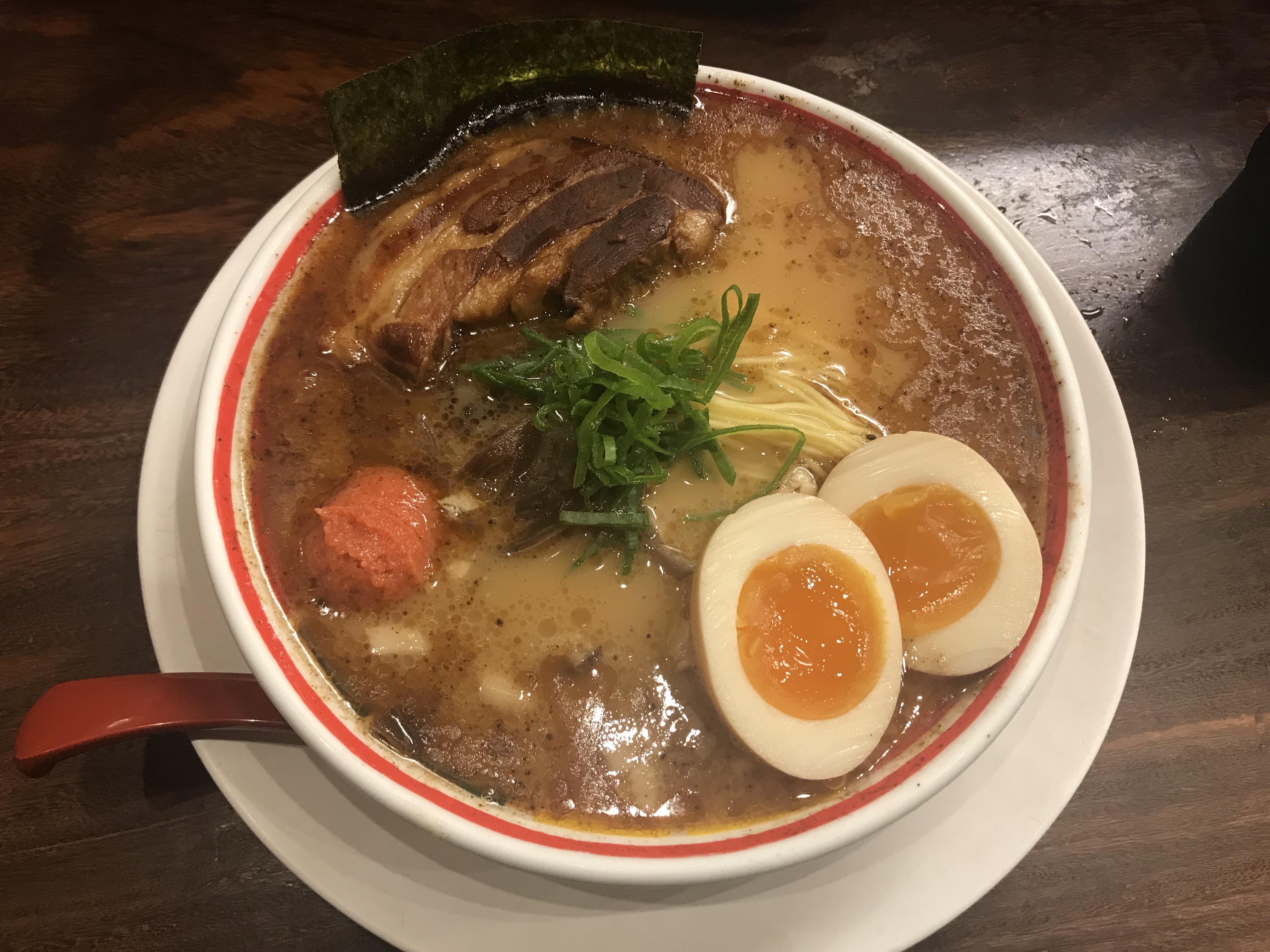
Ramen 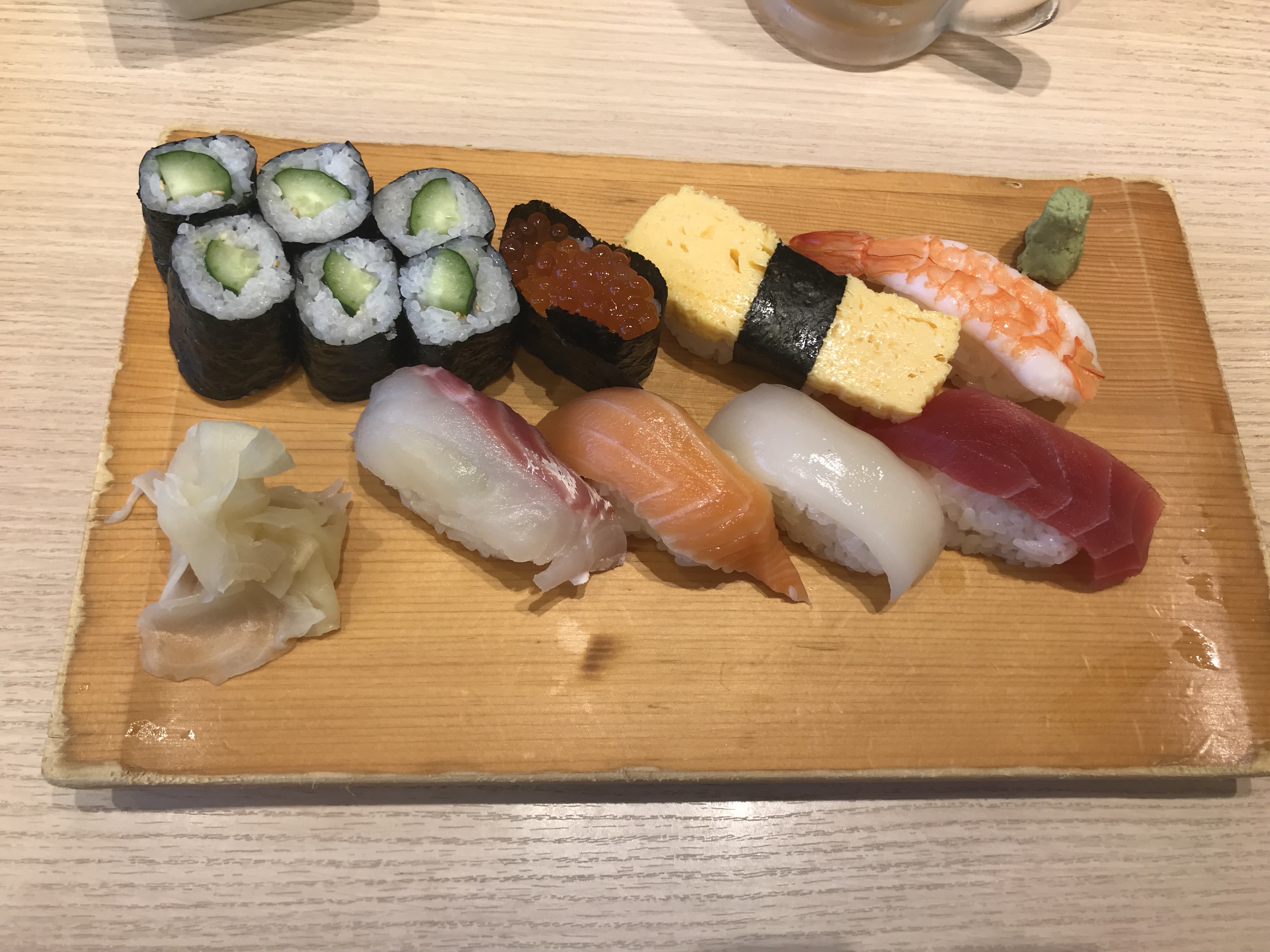
Sushi: cucumber roll, ikura, tamago, shrimp… 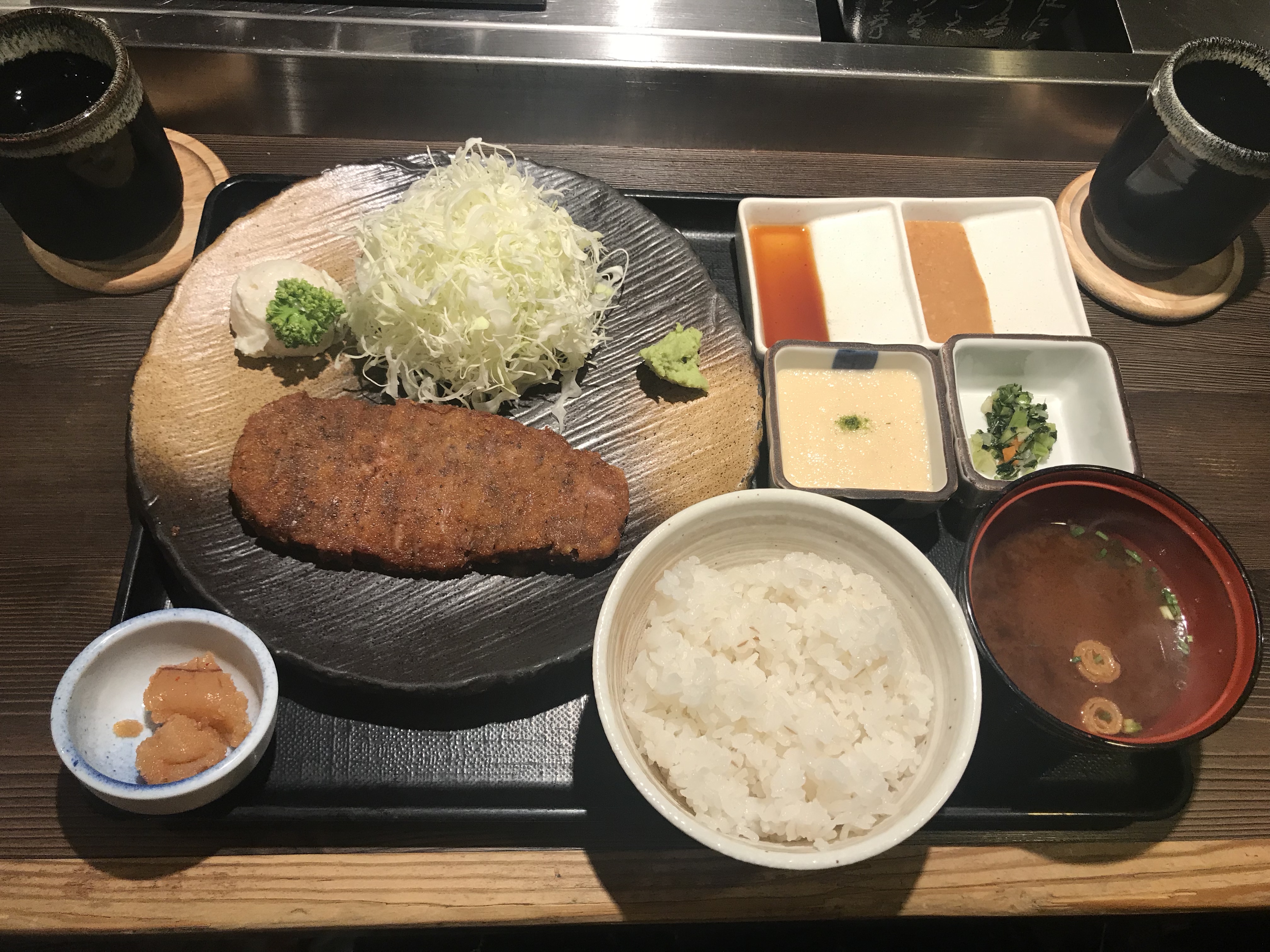
Grill your own beef 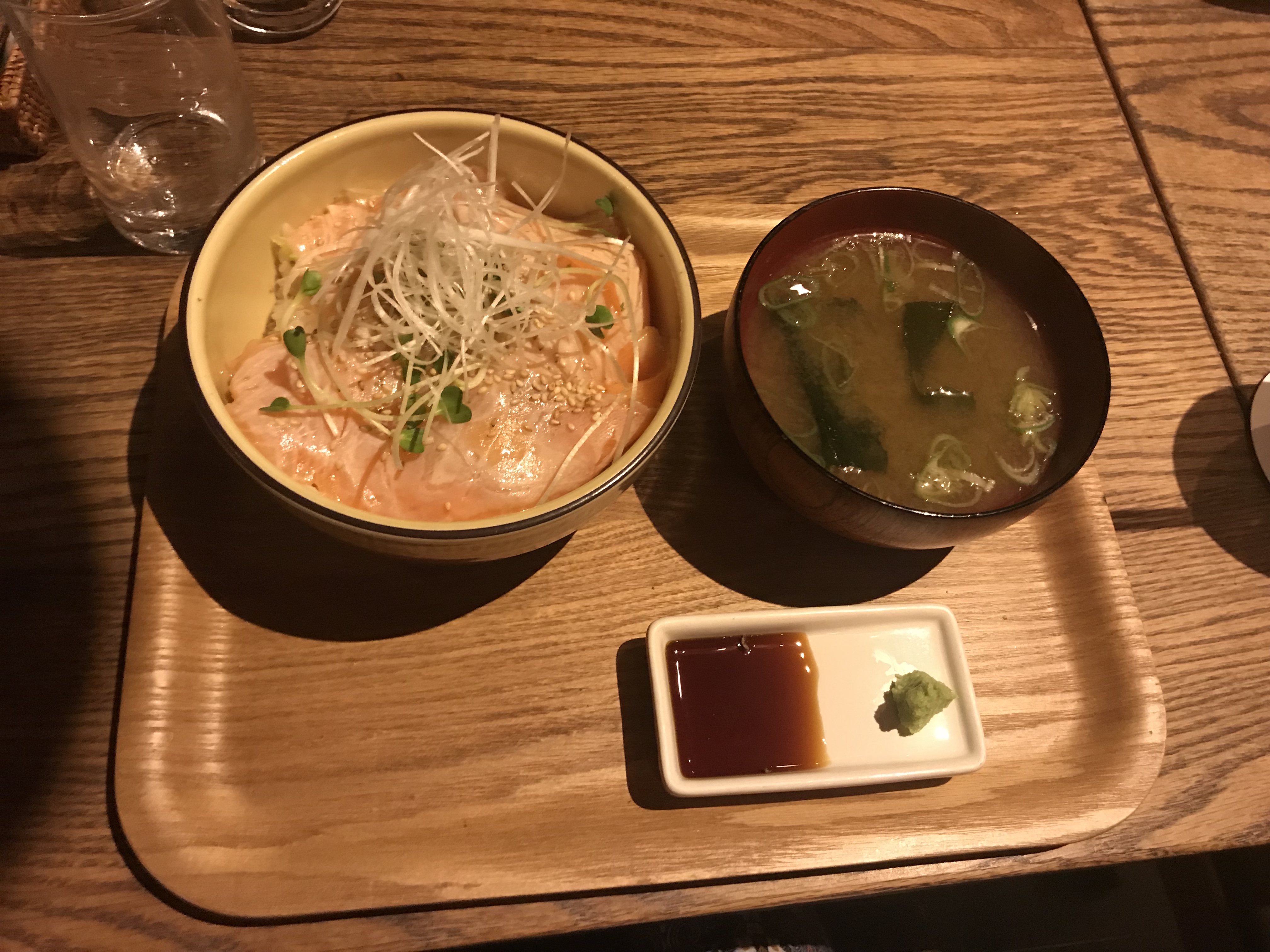
Salmon bowl and miso soup 
Okonomiyaki: savory pancake with meat inside
Exploration: Asakusa
There were many women wearing Yukatas (summer kimonos) walking around Asakusa. These can be bought for a reasonable price, and look so beautiful as people are walking around the grounds. There was a huge shopping district here, also, right when you exit from the train station. It is one street of shopping, we explored about five blocks of it, and it kept going after that, I’m not sure how much farther.

There were many soft-serve ice cream stores with vanilla, matcha, melon and ramune (soda) flavor ice cream. There were also many rotating sushi restaurants, where sushi is rotated on a conveyer belt and you grab the kind you want to eat. We heard people screaming as the rode the still-functional rides on the oldest amusement park in Japan, which was near the temple. It is called Hanayashiki and has been operating since 1853!


Incense to cleanse yourself before entering the temple 

 Dan in Japan